
- Daily Life
When Your Training Route Changes You
There’s something poetic about training routes. You don’t just choose them, they shape you right back. Mine certainly did.
When I first started wheeling, just over five years ago now, it was humbling in the way only a brand-new beginning can be. My first “session” was, generously speaking, somewhere between 50 and 500 metres. Either way, it felt like crossing a continent. Every push was effort, every metre earned.
Naturally, I went back to what I knew.
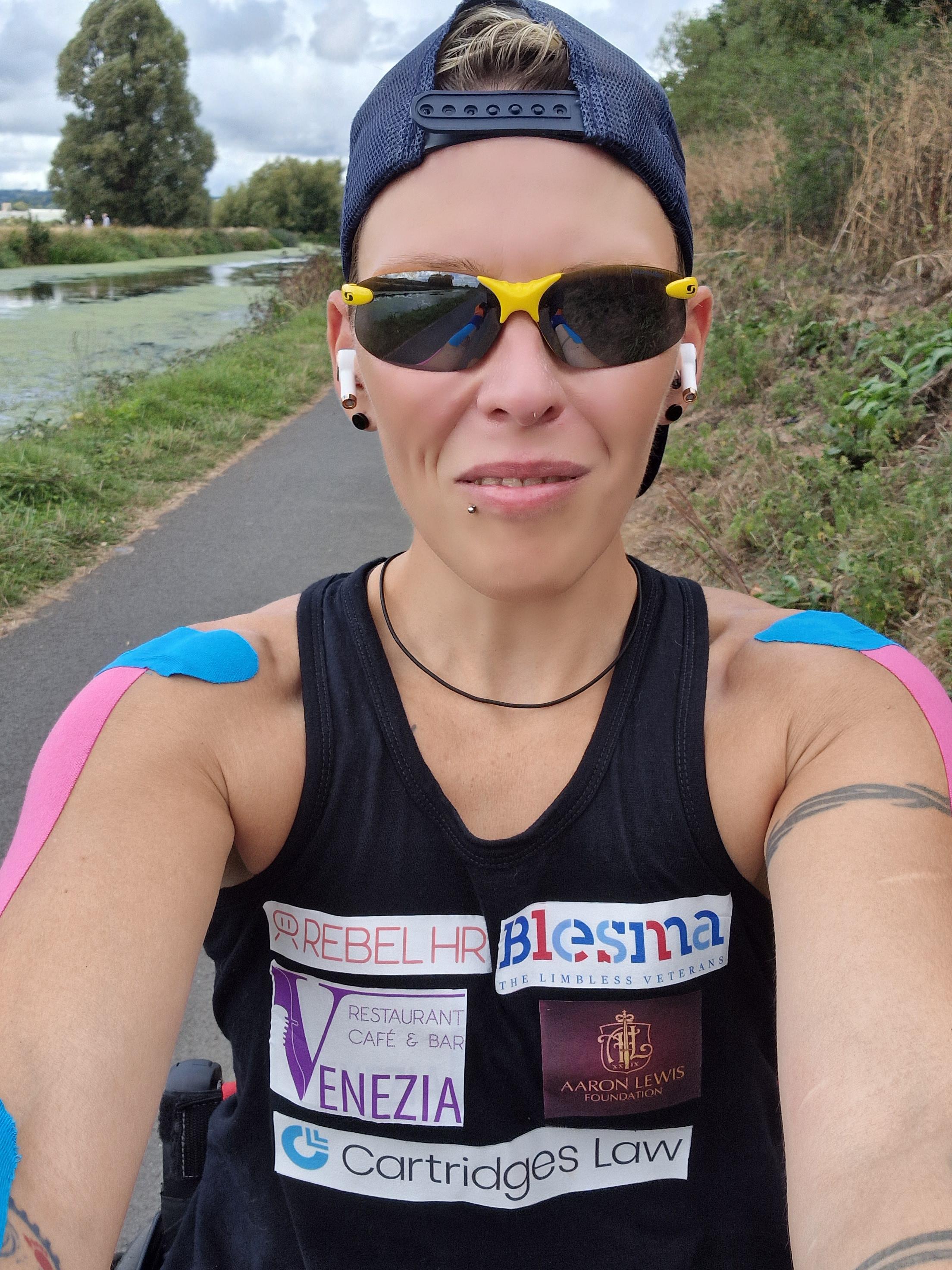
We’d moved to the quay in Exeter, downsizing massively, but upgrading immeasurably in beauty. Before everything changed, that stretch of water had been our playground. We cycled it, ran it, kayaked it. It was how I got to work, how I unwound, how I felt like myself. So swapping running for wheeling along the same path felt… right. Familiar. Almost like reclaiming something.
At first, the goal was simple: build up to Double Locks and back, a 5K round trip.This build up took about a month, though at the time it felt like years. Then I stayed there for a while, repeating the loop, quietly building strength and confidence. But as is the way with these things, “enough” eventually stops being enough.
When the London Marathon entered the picture, suddenly my neat little loop needed stretching. Conveniently, one out-and-back to Turf Locks is half a marathon. Do it twice, job done. Simple. Brutal, but simple. I trained at all times of day. Early mornings, late evenings, warm summer days. I never really thought about safety. Not seriously, anyway. The quay had always been safe. Or at least, it had always felt that way.
Until one day, it didn’t.
It was a warm morning, around nine. Busy enough to feel normal, quiet enough to feel calm. I stopped for a drink near an open stretch of water, a beautiful spot, the kind you pause at without thinking.
And then it happened.
Two lads, young, maybe mid-to-late teens, came out of nowhere. Drinks in hand, trouble in mind. A cyclist approached, just an ordinary guy going about his day. Within seconds, they dragged him off his bike and started attacking him. I froze.
Not metaphorically, completely. I couldn’t help. Not really. Not in any meaningful way. And that realisation hit harder than anything I witnessed. Fortunately, others arrived quickly, two more cyclists who intervened, chased them off, helped the man.
But I was left there, shaken in a way that doesn’t just pass. Because in that moment, something shifted. I went from being someone who might have helped… to someone who couldn’t. And worse, someone who couldn’t even guarantee their own safety. No matter how fast I got, someone on foot could always outrun me. If someone decided to target me, there’d be very little I could do about it.
That’s a hard truth to sit with. So I adapted.
I started carrying a Swiss Army knife, legal, small, more symbolic than anything, but it gave me a sliver of reassurance. I shared my live location with my wife. Told her when I was leaving, when I’d be back. Quiet little systems of control in a situation that suddenly felt very out of my control. But the biggest change? I stopped going there.
Not immediately, but gradually. A few more incidents. A few more uncomfortable moments. Enough to tip the balance. That stretch, the one I loved, the one that meant something, was no longer worth the risk.
So I moved training. To the seafront. To the track. To places where help was nearby, where visibility worked in my favour, where vulnerability didn’t feel quite so exposed.
And that’s the part that sticks with me.
Not the fear itself, but what it took away.
Because it’s a strange kind of loss, grieving a place that still exists. The path is still there. The water still moves the same way. People still walk it, run it, cycle it.
But for me, it’s different now.And that’s… a shame. It says something, doesn’t it? About how quickly a sense of safety can disappear. About how community isn’t just about sharing space, it’s about protecting it, too. I’ve been lucky, truly. I’ve never been directly attacked or abused out there. Many others in wheelchairs haven’t been so fortunate. Their stories are far worse. Mine is just a warning shot, I suppose.
And yet, there’s still training. The beach, for one. Always the beach. If I could train anywhere, it’d be there every time. There’s something about it that resets everything.
And the track, yes, it’s repetitive. Mind-numbingly so, at times. But it builds something important: resilience. The kind you need for ultra events, where scenery doesn’t matter because you’re too focused on the road ahead, every crack, every pothole, every bit of debris. You learn to look forward. To stay locked in. To keep going.
Maybe that’s the lesson in all of this. Routes change. Circumstances change. Sometimes, parts of your world shrink in ways you didn’t choose. But you adapt. You find new ground. You keep moving. Even if it’s not the route you would’ve picked.